Wellness Plan
WOOD - SPRING - LIVER AND GALL BLADDER - SOUR - GREEN
FIRE - SUMMER - HEART AND SMALL INTESTINE - BITTER - RED
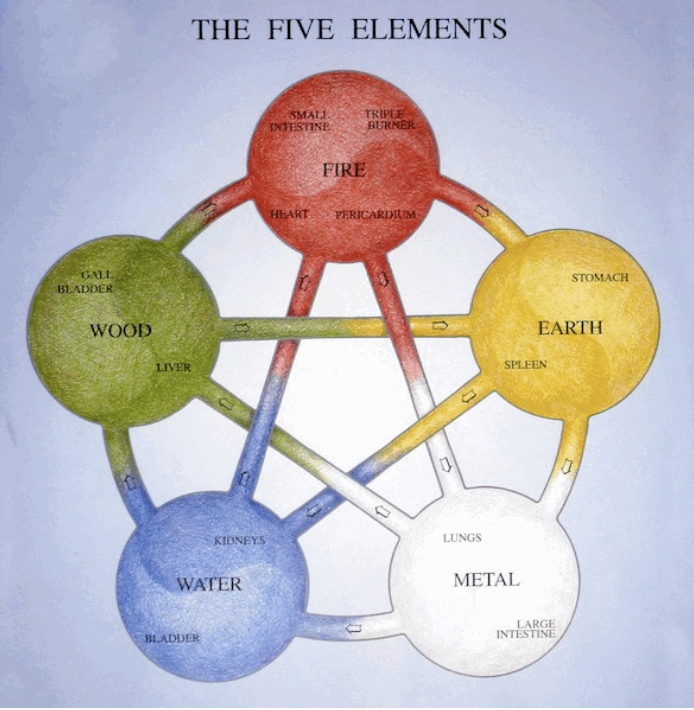
EARTH - LATE SUMMER -STOMACH AND SPLEEN - SWEET - YELLOW
METAL - AUTUMN - LUNGS AND LARGE INTESTINE - WHITE - PUNGENT
WATER - WINTER - KIDNEYS AND BLADDER - SALTY - BLUE/BLACK
TCM is a HUGE topic and I am only going to be looking at it with a very light touch but I feel its this light touch that is all that’s truly needed for modern living.
The first important step is to just get familiar with the elements.
There are 5 elements and each one relates to a different time of year, with a different color, season and bodily organs that correlate to them. Each element also links to different flavors and taste. Try and begin to become familiar with this chart because I would like for you to refer to it regularly.
In TCM, including the 5 flavours when cooking not only brings a balanced plate of food but can also create more harmony in the body.
For now, the main things I would like to focus on with the 5 elements are the tastes/ flavours associated with each and also the organs paired with them. We will dive deeper into each element during each module.
THE 5 FLAVOURS AND MAKING UP A BALANCED PLATE
The 5 flavours/tastes create actions within the body, moving energy in different directions. Ideally, the 5 elements should be balanced when we create a dish, not just to taste good but also to support our internal organs and Qi. Flavours can also help when there might be an imbalance within the system, helping to move stuck energies or blockages.
For instance, sweetness nourishes, sourness astringes and contracts, acridity induces sweating, bitterness clears heat, and saltiness softens hard masses.
THE FIVE FLAVOURS
-

SOUR - UPWARDS
The Wood Element (Spring)
Live and Gallbladder
Cooling, contracting, consolidating, generates fluids, tonifies Yin.
Foods - Leafy green vegetables, raw, steamed or boiled briefly. Sauerkraut, vinegars and lemon.
The Liver and Gallbladder, organs very much linked to emotional and physical flexibility and circulation.
The flavour can have a contracting effect, which can have a refreshing effect but balance is crucial as too much can lead to Liver Qi stagnation
-

BITTER - DOWNWARDS
The Fire Element (Summer)
Heart and Small Intestine
Clearing heat, drying, dextoxing, stimulated purging, tonifies Yang.
Foods - Fried onions, garlic, ginger. Mild/warm spices, coffee, alcohol, oils, nuts, seeds and herbs.
Bitter flavours are found to have a drying, downwards, draining effect on the body, often producing a cooling effect.
-

SWEET - CENTERED
The Earth Element (Late Summer)
Stomach and Spleen
Nourishing, building, moistening, calming, relaxing, strenghtening, tonifies Yin, supplement Qi and blood.
Foods - Root vegetables like sweet potatoes and ground vegetables -cooked into a soup, stew or casserole. Stewed fruits
When used wisely, sweet foods can help the body to slow down acute reactions and provide a feeling of grounding. However, too much can lead to dampness, sluggishness, and other imbalances.
-

PUNGENT/SPICY/ACRID - INWARDS & DOWNWARDS
The Metal Element (Autumn)
Lungs and Large Intestines
Dispersing action, relieves stagnation, moves Qi and blood, circulation, breaks down mucus, stimulates digestion, activating, warming, tonifies Yang
Foods - Baked, slow cooked. Grains like brown rice, wheat, rye, barley, oats or spelt. And pungent diakon pickles.
Often very much linked to the lungs and respiratory system. The acrid flavour can help to move Qi and circulate bodily fluids
-

SALTY - IN ANY DIRECTION
The Water Element (Winter)
Kidneys and Bladder
Softening, moistening, sinking, cooling, detoxifying, tonifies Yin
Foods - Teas, watery vegetables and fruit, seaweeds, miso soups, bean soups, stews or casseroles, mild use of sea salt
Salty foods can have a softening effect and help to move stagnation. Salty foods can often be mineral rich and help to boost the blood with goodness
THINKING ABOUT LAYERING TEXTURE & FLAVOUR FOR THE ULTIMATE PLATE
Experimenting with different textures and flavours can be a game changer when trying to balance your plate of food and make it truly wonderful. Thinking about these key elements I believe makes all the difference when bringing your food to life.
CRUNCHY
Nuts, seeds, crispy onions, croutons, firm tofu, pickled cucumber, granolas, oats, coconut, crumbled biscuits, crusty sourdough
SMOOTH
Silken tofu, eggs, creams, butter, nut butters, cheeses, oils, avocado, yoghurt, pulses, tahini paste
BITTER
Dandelion leaves, chopped coriander, rocket, garlic, tahini paste, fenugreek, oregano, lavender, mustard, lemon zest
UMAMI
Miso paste, seaweed sheets, unami paste, sardines, wostershire sauce, coconut aminos, tomatoes, parmesan, mushrooms
SWEET
Honey, maple, agarve, sugars (I prefer to use light and dark muscavados), barberry, jams, Coconut, vanilla,
SOUR
Vinegar, pomegranate mollasses, lemon juice, Za’tar, barberry, hibiscus powder, tamarind, Kefir, yoghurt, rhubarb, gooseberries, citrus fruits, preserved lemons
SALTY
Nuts, capers, kimchi, anchovy, parmesan, bacon, soy, pickles, miso paste
SPICY
Chilli, wasabi, horseradish, tabasco, dried chillies, jalapenos, harissa paste, shriracha,